Author: John Holden

  • Frost on Window

    Frost on Window

    Last weekend the temperature went down to -12.6 degrees Fahrenheit in Newtown, Connecticut.  I’ve never seen temperatures that low in this area.  The previous low was -6 or -3 last year.

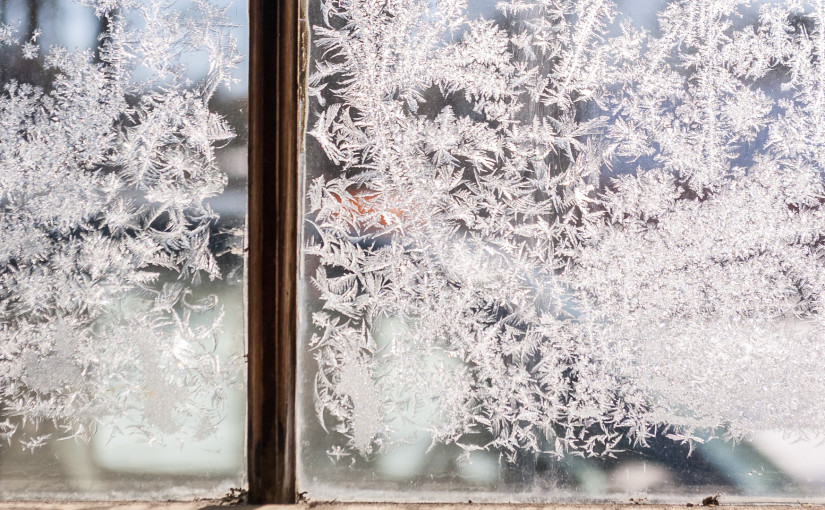
    The frost created beautiful crystals on the window.  I’m sure there’s a scientific explanation for why.  I’m just going to enjoy their beauty.

    Frost Crystals on Garage Window_1920 x 1080 px
    Looking out the garage window. You can see the roof of my truck in the background.
    Frost on Window_1920 x 1080 px
    On the left side you can see the window molding.  Frost formed on the storm windows.


  • Plants Want to Grow

    Plants Want to Grow

    Plants amaze me.

    I spend a lot of time and effort making the best possible environment for my landscapes.  Then, I’ll be walking through the woods and see a tree growing out of a boulder.

    You almost have to go out of your way to kill a plant.

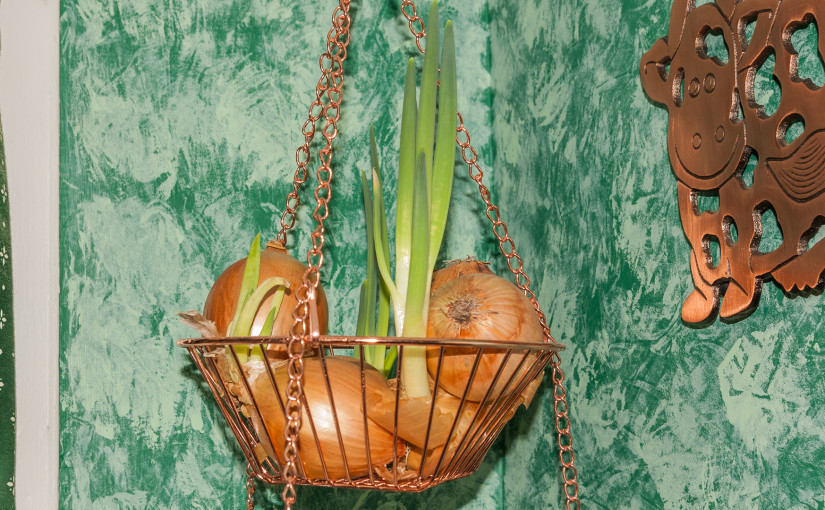
    These onions growing in my kitchen are a great example of a plants wish to live.

    Red Amaryllis
    Bonus photo: This red Amaryllis graces my kitchen counter. If you’ve never grown an Amaryllis pick one up. They’re a lot of fun to grow and hard to kill.
  • Spring Begins in Fall

    Spring Begins in Fall

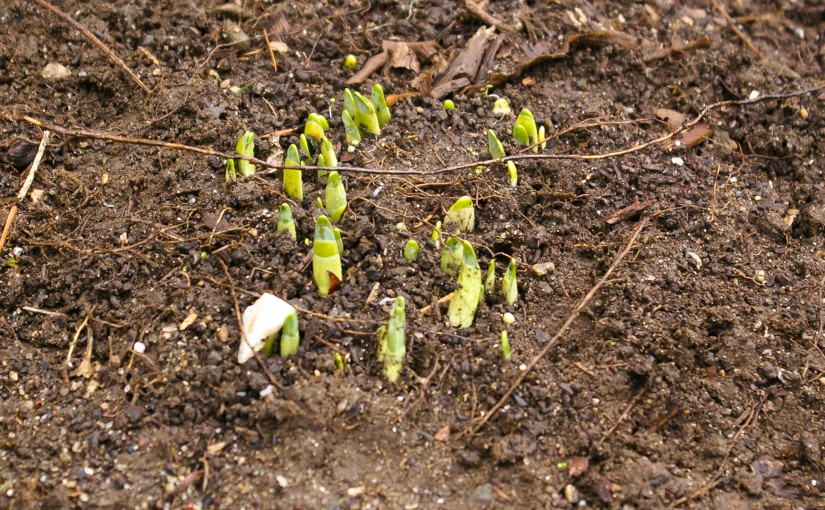
    This morning as I waited for the school bus I noticed my daffodils emerging.  It’s been a mild fall and they’re just poking through the soil.

    Sedum Buttons
    New growth on Sedum called buttons.

    Plants set bud in the fall so they’re ready to go when the warm weather arrives.

    German Iris
    The old foliage on my Iris died back leaving miniature Iris plants. The new growth won’t look this good in the spring after repeated freeze thaw cycles.
    Lenten Rose Flower Buds
    Flower buds on my Lenten Rose (Helleboris sp.) are ready to go. Lenten Rose blooms in April often while snow is still on the ground.

    Don’t think your plants are the only thing growing in the garden.  There’s a class of weeds called winter annuals that germinate in the fall.  Now is a great time to pull them.

    Chickweed
    Chickweed is one of the most ubiquitous winter annuals. Chickweed is remarkably easy to control if you get it while young.

    If the weather stays mild take advantage and do some weeding.  It’ll make a huge difference in the spring.


  • Christmas Cactus Bloom

    Christmas Cactus Bloom

    I’m not a houseplant expert but sometimes I get lucky. 🙂

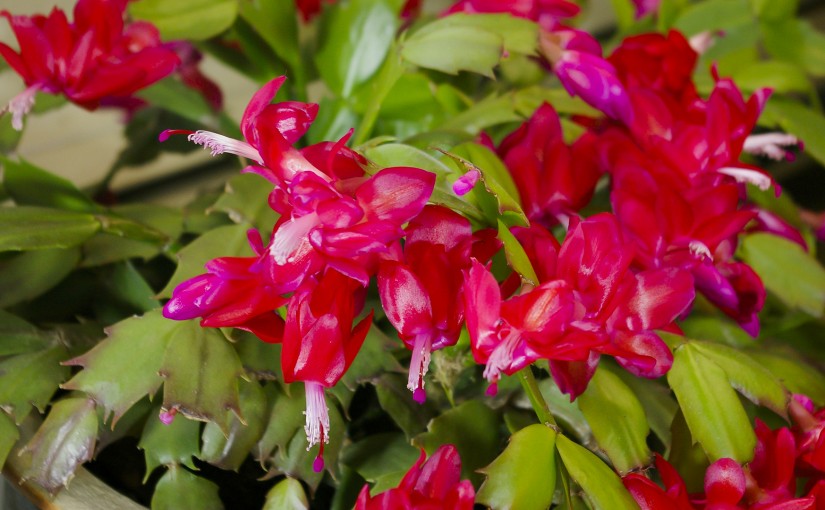
    This week my office has been lit up by my Christmas Cactus.  I wish I could take all the credit for these beautiful flowers.  I have to give credit where it’s due.

    Thanks Mother Nature.

    After reading about Christmas Cactus I learned I have a Thanksgiving Cactus.  You can tell by the pointed lobes on the ‘leaves’ and the early bloom.

    Christmas Cactus
    I kept the Thanksgiving Cactus outdoors most of the summer and fall. Perhaps that had something to do with my luck.
  • Late Season Blooming Flowers

    Late Season Blooming Flowers

    Last Monday, November 16th I was cutting back perennials in Trumbull, Connecticut in USDA Hardiness Zone 6b.  I noticed a couple of beautiful late season blooming flowers.

    We’ve already had several hard frosts.  Most of the leaves have fallen off the trees and been cleaned up.

    Late Season Blooming Flowers

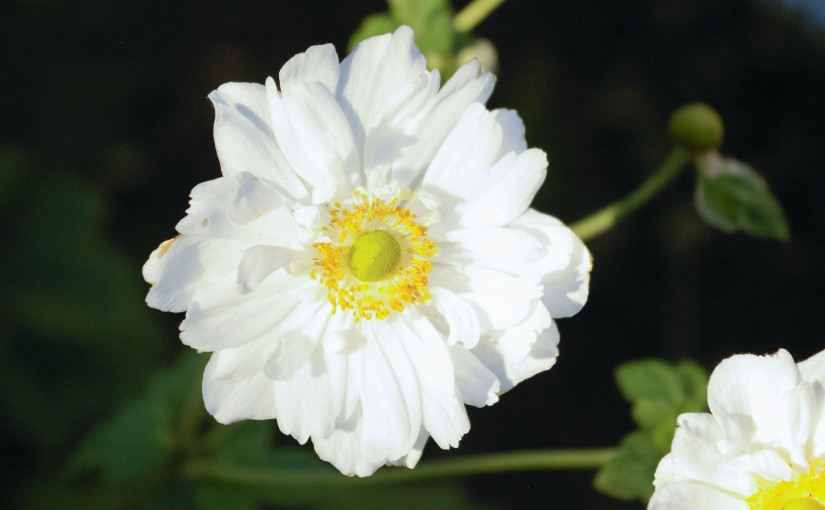
    I first noticed a grouping of Honorine Jobert Windflower (Anemone × hybrida ‘Honorine Jobert’) flowers glistening in a sunbeam.

    Anemone × hybrida 'Honorine Jobert' Distance

    A little farther away a Fairy Rose (Rosa ‘The Fairy) was strutting its stuff.

    Fairy Rose Closeup

    Here’s a picture from a distance.

    Fairy Rose Grouping - late season blooming flowers

    I admit late season blooming flowers don’t compare to mid-summer.  In the cold and gloomy days of late fall I’ll take whatever I can get.

  • Learning New Things – Adobe Audition

    Learning New Things – Adobe Audition

    Adobe Audition is a program that mixes and enhances sound tracks.  I’m hoping to take my videos to the next level with it.

    Today is the second day I’ve tried to learn Adobe Audition.

    As a non tech person I find Adobe products very frustrating.  You must do things a certain way or you won’t get the results you want.  Details that make a project shine are hidden beneath endless twirl down menus.

    If you learn Adobe Products, especially keyboard shortcuts, you can create amazing things.  The juice is worth the squeeze.

    But this post isn’t about Adobe Products.

    This post is about learning new things.

    I went for a walk with Theo this afternoon to get away from Audition (See step 2 below).  While walking I thought about my process of learning new things.

    For me it looks something like this.

    1. Excitement about learning something new and Hyperfocus for a couple of days.  There’s usually some lost sleep and a total disregard for anything else going on in life.
    2. Burnout from too much focus on one thing.  The need to ‘get away’ for a while.
    3. While getting away thoughts of how I could have done things better.  How I could have broken the learning curve into smaller pieces.
    4. Starting again at a more relaxed pace or stopping because the reward isn’t worth the gain.  It’s rare I take something this far and abandon it.  I’m committed to learning no matter the cost.

    When I install landscapes the process is similar

    The first day is a throw away day.  I’m happy to get equipment to the job and start work.

    By the end of the day my mind is formulating a plan for the project.   Every job has a unique set of challenges.

    By the next morning I have a mental picture of how to complete the job and how long it should take.

    The pre-job jitters are gone and I methodically create a beautiful home.  I’ve re-adjusted my timeline to match the job.  Work continues until job completion.

    I’ve got to get back to Audition.
  • Blue Holly and Bittersweet

    Blue Holly and Bittersweet

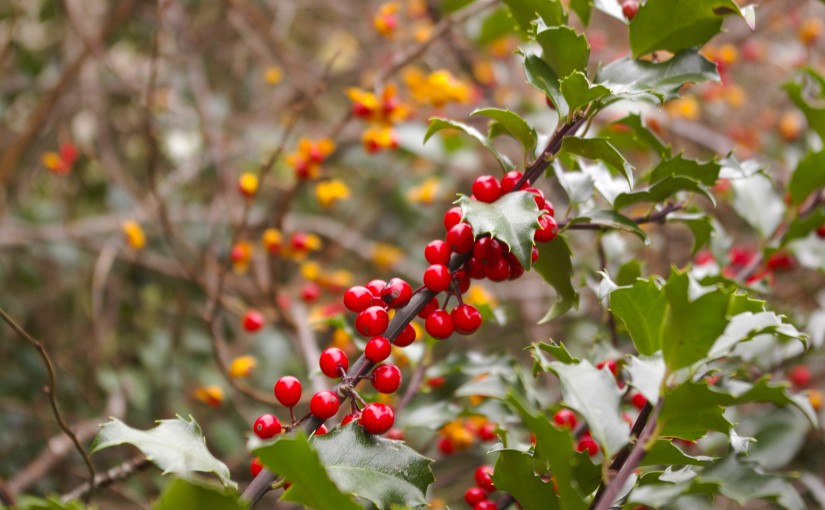
    I stepped out of my truck today and viewed gorgeous blue holly (Ilex x meserveae sp.) and bittersweet (Celastrus orbiculatus) growing in a tangled mess.

    If you live in a cave you should know that bittersweet is invasive in Connecticut and against the law to plant.  You’ll often see it growing along the side of the road.

    Here’s a picture with the bittersweet in focus

    Bittersweet (Celastrus orbiculatus)

    This is what the beautiful mess looks like

    Bittersweet and Holly

    Over time the bittersweet will block light to the holly and wrap around it’s branches strangling it.

    Bittersweet and holly do look great together in the fall.

  • Fire Gazing

    Fire Gazing

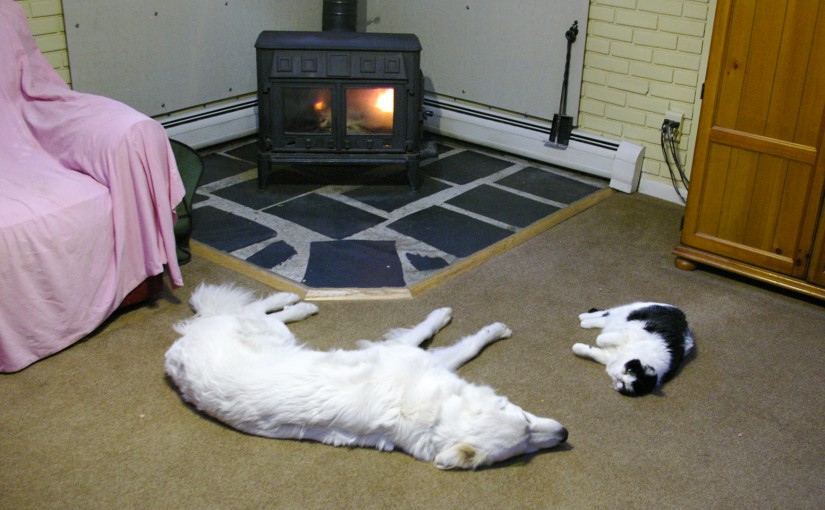
    Sugar the cat (15 lb, 15 yrs) and Theo the Great Pyrenees puppy (90 lb, 1 yr) enjoying the warmth of a morning fire.

  • Prune Lawn Trees High

    Prune Lawn Trees High

    I just returned from an evening walk with Theo and my forehead burns from a fresh scratch.

    Theo walked around a tree four feet from the road.  As I went around the back a branch caught me 3 inches above the eyes.

    I did have a flashlight.  I was looking at the ground for footing and suddenly smack!

    This is a great example of why it’s so important to prune lawn trees above people’s heads.  Assume folks will be walking in the dark and can’t see where they’re going.

    People driving down the street or your driveway also appreciate not having their cars scratched.

    A final friendly tip.  Don’t leave stubs on a tree, especially at eye height, where someone can lose an eye.

    Theo the Great Pyrenees Mix Pupply
    Theo our Great Pyrenees mix puppy.  He’s 90 lbs at just over a year old.  What a sweetheart.  He loves people, dogs, cats and creatures of all shapes and sizes.